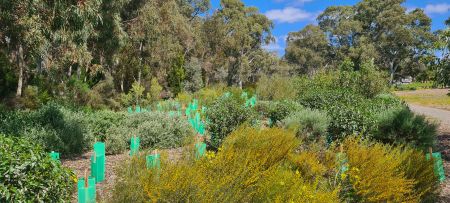
Habitat restoration
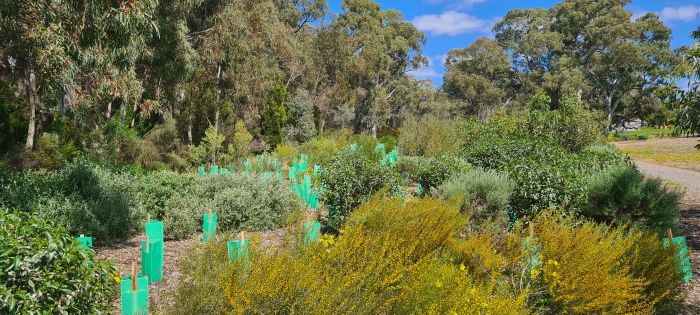
One of the main goals of biodiversity management in the City Tea Tree Gully is to create better homes for a variety of native animals.
Mulch - why it’s important
You might have seen large areas covered with mulch that haven’t been planted for a while. These areas may seem forgotten but that’s not true at all.
We use mulch to help improve soil health before we plant anything. Ideally, the mulch is laid down at least two years before planting. Mulch also helps by:
- keeping weeds under control before planting
- using less herbicide
- needing less maintenance after planting
- reducing how much water the plants need
- helping the plants grow healthier and stronger.
Planting for more diversity
After the mulch is laid down, we plant in stages. The first plants are fast-growing shrubs. These quickly cover the ground and help stop weeds from taking over, while also improving the soil.
After a few years, some of the big shrubs might be removed on purpose so we can plant more types of plants. It may look like we're taking a step back, but we're actually helping nature by swapping fast-growing plants for slower-growing and more delicate ones.
The remaining fast-growing shrubs provide cooler, protected spaces where the slower-growing plants can thrive. This process may happen several times over the years to add even more diversity.
When we remove shrubs, we cut them into pieces and leave them on the site as chunky mulch. This is a great home for wildlife like insects, lizards, frogs, and echidnas. We then plant groundcovers and creepers among the mulch to make the area look green again.